Funobotz Discovery World 24-Hour 3D Game Hackathon
Build it your way. Any engine. Any platform. One condition - make Discovery World playable.
The Three Discovery Worlds
Every team chooses one Discovery World theme. Explore the stories, locations, and engineering challenges below before registering.
Creator Planet
A miniature community where everyday places, public services, transport, learning spaces and infrastructure are connected. The world encourages players to think like planners, builders, helpers and young engineers.
Village Tollgate: Access control, timing, traffic flow, gate mechanisms, queue management.
Bridge & River: Crossing, structural challenges, blocked paths, transport, flood or movement puzzles.
School: Delivery, classroom systems, playground safety, bell/signalling, organization.
Library: Search, sorting, resource delivery, quiet-zone navigation, knowledge quests.
Water Tower: Distribution, level control, routing, conservation, emergency supply.
Market: Resource movement, logistics, arrangement, customer flow, transport.
Hospital: Priority access, emergency routing, delivery and support missions.
Fire Station: Fast response, route planning, obstacle clearing, emergency systems.
Adventure Quest World
A fantasy exploration world where nature, mystery, imagination and engineering challenges appear along a journey. The player progresses by exploring places, understanding obstacles and creating ways to move forward.
Grand Gateway: Quest start, choice of route, access puzzle, tutorial and world introduction.
Hidden Forest: Path restoration, navigation, obstacle handling, environmental protection.
Rainbow Bridge: Crossing, balance, temporary support, transport, structural puzzle.
Castle Place: Movable doors, lifts, access, delivery, tower mechanisms, hidden routes.
Mystery Cave: Light, mapping, signalling, route discovery, narrow-space movement.
Fairy Garden: Gentle handling, environmental protection, path creation, creative building.
Dragon Valley: Final multi-step challenge, rescue, restoration, resource or engineering mission.
RoboVerse Academy
A future learning and innovation campus where students, teachers, makers, engineers and robots work together. The world focuses on invention, experimentation, design, coding, testing and improving ideas.
Smart Entrance Gate: Detection, access logic, sequence, timing, identity or condition-based opening.
Welcome Center: Role selection, mission board, onboarding, map and progression.
Knowledge Center: Search, sorting, component selection, information-based puzzles.
Coding & AI Hub: Programming logic, virtual sensors, event-response systems, debugging.
Innovation Tower: Material lifts, inspection systems, construction, mechanisms, multi-level puzzles.
Testing Arena: Performance tests, iteration, scoring, reliability, timed or constraint-based trials.
Funobotz Characters as 3D Game Elements
Handbook Section 1 & 19: Character integration must be meaningful to gameplay rather than decorative. Click any character to inspect details and zoom in high definition.
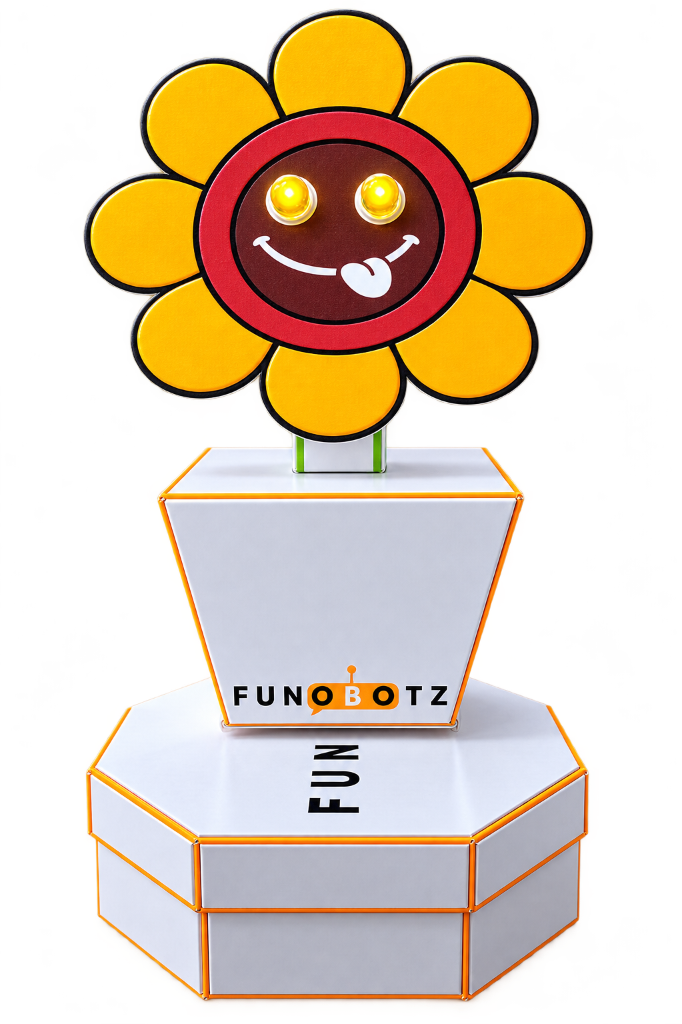
Petalo
Petalo uses light-based signalling to guide players through dark regions (such as Mystery Cave), illuminate hidden paths, trigger photosensitive switches, and provide vital visual status feedback in 3D puzzles.
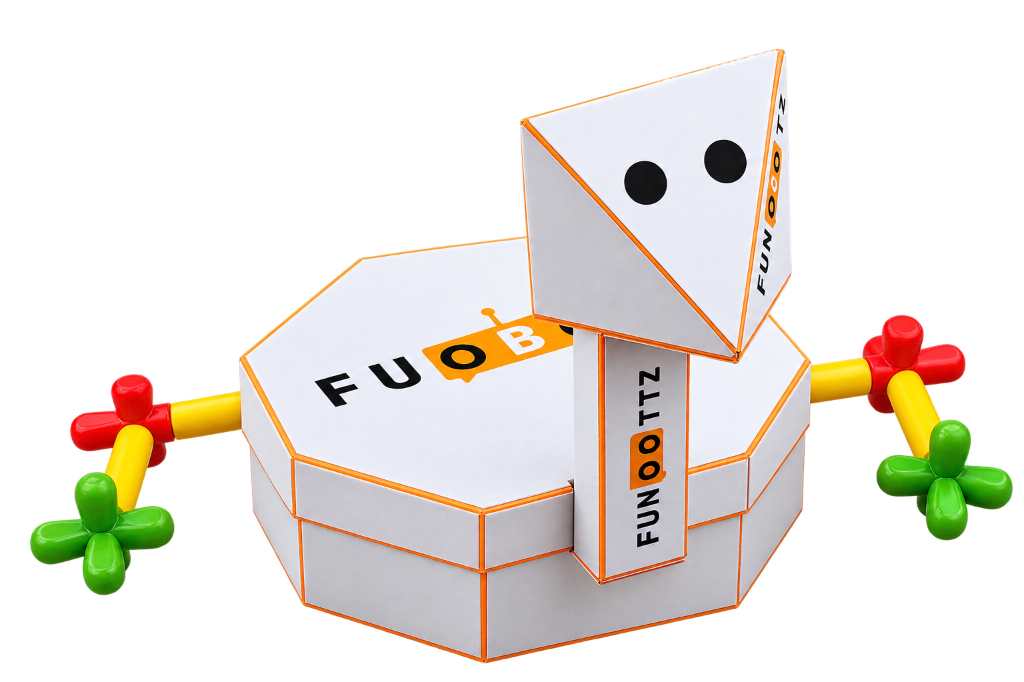
Quacky
Quacky scouts ahead, delivers vital resources across challenging terrain, navigates narrow spaces that the player cannot reach, and serves as an interactive companion robot.
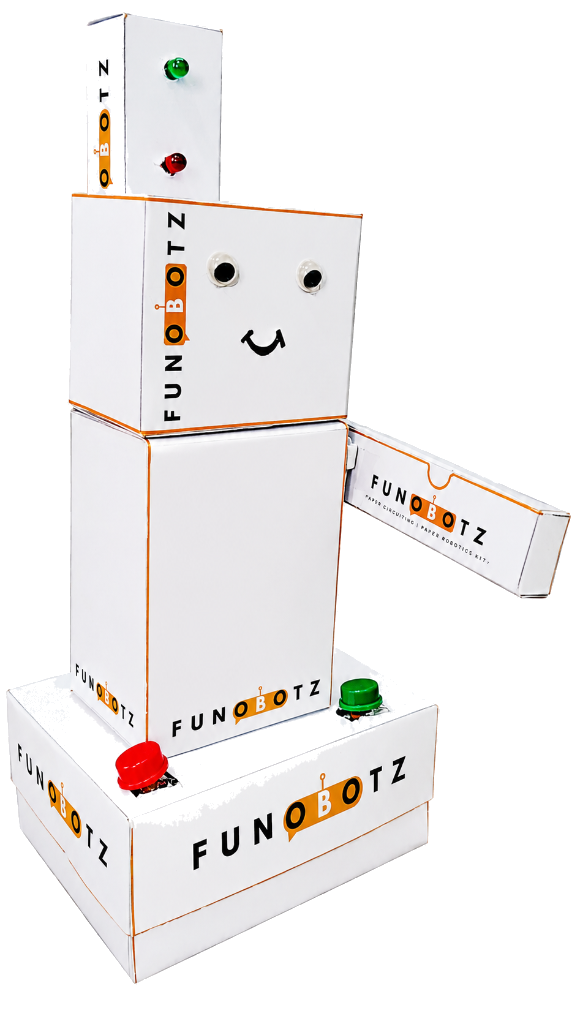
Tolly
Tolly operates critical entrance barriers (like the Village Tollgate), regulates traffic and queue flow, triggers time-based puzzle gates, and serves as an interactive security checkpoint.
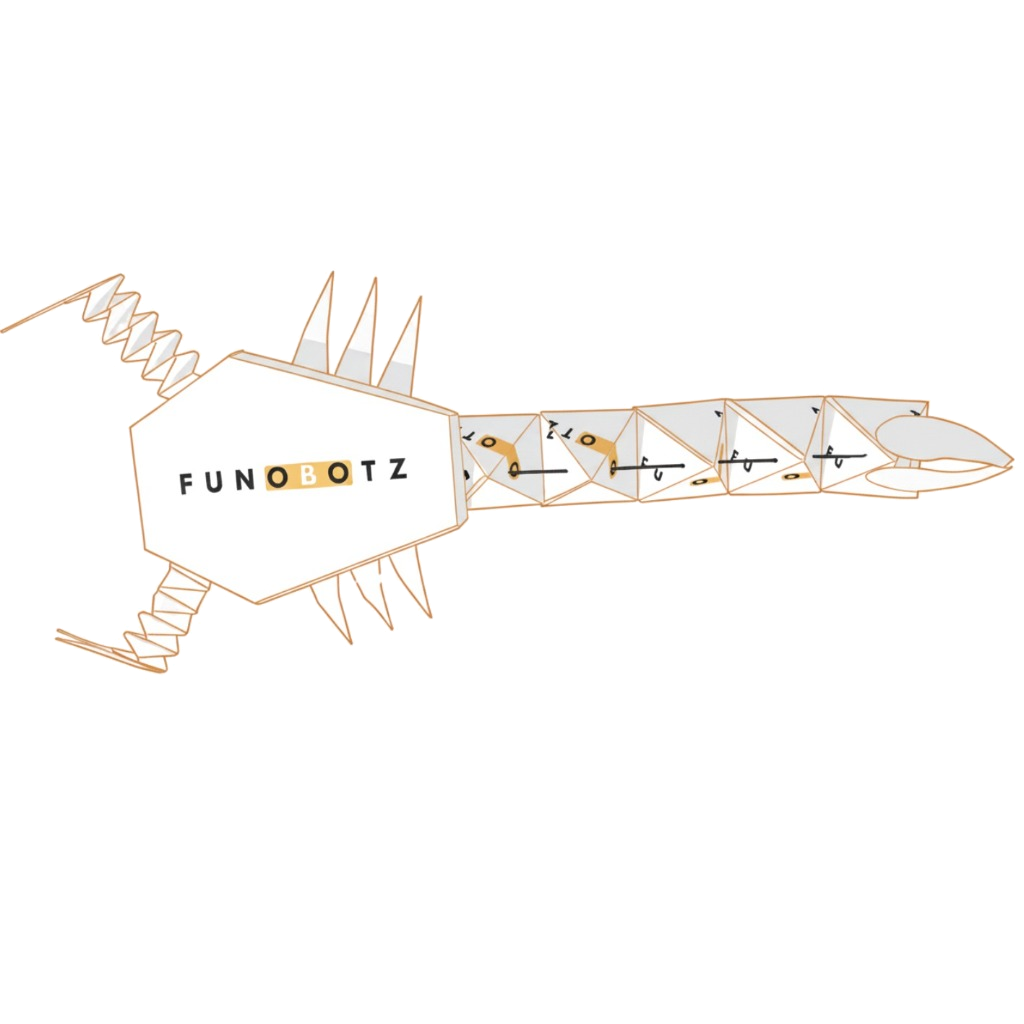
Tiko
Tiko provides dynamic physical interaction: lifting obstacles, pushing bridge spans into alignment, pressing remote mechanical switches, and executing rescue maneuvers across hazardous zones.
Five Fixed Game Categories
Each team chooses one primary category. Secondary mechanics are permitted, but official scoring is evaluated against the declared category.
World-Building Game
Players construct, shape, modify and configure elements of the 3D environment to solve challenges and create spaces for characters.
Story-Driven Adventure Game
Narrative-guided progression where dialogue, discoveries and story chapters drive environmental puzzles and exploration.
Mission-Based Challenge Game
Goal-oriented missions where players must fulfill specific constraints, deliver cargo, clear blockades or operate checkpoints.
Engineering Puzzle Game
Systems-thinking challenges where mechanisms, virtual logic, gears, sensors or balancing structures must be designed and tuned.
Simulation & Role-Play Game
Living systems where players manage roles (e.g. Village Engineer, Academy Proctor, Forest Guardian) with economic or ecological feedback.
Four Progressive Evaluation Phases
All 100 teams build through Phases 1–3 without early elimination. Cumulative scores determine the Top 10 Finalists for Phase 4 Expo.
Game Design Document
Theme fit, game clarity, category alignment, originality & 24h feasibility. Automatic AI evaluation.
Game Design Review
3D world layout, loop quality, child usability, wireframes & interaction plan. Automatic AI evaluation.
First Playable Game
Working 3D vertical slice, stability, fun factor & category excellence. Determines Top 10 qualification!
Final 2-Hour Expo
Top 10 Finalists live playtest, jury demo, product potential & Funobotz internship shortlisting.